

A packaging design that works well for a lightweight lotion may be unsuitable for a thick eye cream or an oxidation-sensitive serum. The difference is not simply the shape of the container. Formula viscosity, dispensing accuracy, material compatibility, hygiene, and the way consumers apply the product all influence the final choice.
For beauty brands, functional packaging should solve a specific problem without making filling, storage, transport, or daily use unnecessarily complicated. A well-designed package can make application more convenient, support consistent dispensing, and give a product a clearer identity on the shelf.
Choose functional cosmetic packaging by matching the container and applicator to the formulation, application method, and product requirements. Squeeze tubes suit many creams and lotions; roller or massage applicators can support targeted application; and pumps or barrier structures may be appropriate for formulas that require controlled dispensing or additional protection. Validate the complete package with the actual formulation before approving production.
The first question is what the product must do inside the container. A low-viscosity serum may flow through a narrow opening, while a dense cream may require a larger dispensing path. A formula containing ingredients sensitive to oxygen or light may also need a more protective structure than a basic moisturizer.
Before selecting a container, document the following characteristics:
These questions help eliminate unsuitable designs before money is spent on tooling, decoration, or a large sample run.
Different product categories have different dispensing needs. The most useful packaging is not necessarily the most complicated; it is the option that delivers the required product amount with acceptable convenience and reliability.
| Product type | Potential packaging | What to validate |
|---|---|---|
| Eye cream | Small tube with precision or massage applicator | Dose control, contact comfort, cleaning, and leakage |
| Facial moisturizer | Squeeze tube, bottle, or pump | Viscosity, residual product, and dispensing effort |
| Sunscreen | Squeeze bottle or tube with suitable closure | Formula compatibility, portability, and seal integrity |
| Scalp treatment | Narrow nozzle or comb-style applicator | Parting access, flow rate, clogging, and residue |
| Sensitive serum | Compatible pump, tube, or bottle system | Air exposure, dose repeatability, and stability |
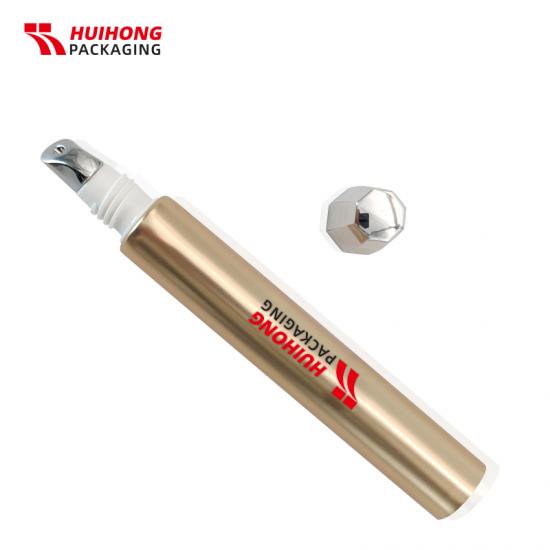
For example, 20ml eye cream tube with metal applicator is a relevant option to investigate when developing a targeted eye-care product. The metal contact head, tube structure, and closure should be assessed together rather than as independent components.
Packaging materials affect more than appearance. They influence mechanical strength, flexibility, barrier performance, decoration options, and end-of-life handling. The right choice depends on the complete packaging structure and the formulation it will contain.
| Material or structure | Potential advantages | Important checks |
|---|---|---|
| PE tube | Flexible, lightweight, and suitable for many creams | Formula compatibility, wall thickness, and barrier needs |
| ABL laminated tube | Supports decoration and can provide a barrier layer | Layer structure, seal integrity, and disposal requirements |
| EVOH-containing structure | Can improve oxygen barrier performance when correctly engineered | Actual layer design, moisture conditions, and measured barrier data |
| PP components | Useful for various closures and molded parts | Fit, stress resistance, compatibility, and recyclability goals |
| Metal applicator | Provides a distinct contact surface and premium tactile feel | Corrosion resistance, contact safety, cleaning, and assembly |
Material names alone are not proof of performance. Ask the supplier for the exact structure, relevant test methods, and data for the finished package. For oxygen-sensitive formulations, for instance, barrier performance should be measured or documented for the proposed structure instead of inferred from a material label.
Innovative cosmetic packaging is most useful when its additional features solve a clear consumer or formulation problem. A distinctive design may improve product recognition, but extra components can also increase cost, assembly complexity, and quality risks.
Rollers, metal heads, and other specialized applicators can change how a product is distributed across the skin. They may be suitable for eye creams, facial treatments, and selected scalp products. The design should be evaluated for smooth movement, dispensing consistency, contact comfort, and cleaning requirements.
A dual-compartment system can keep two formulas separate until dispensing, where the intended product requires it. However, the design introduces additional requirements: independent filling, compartment sealing, output balance, and clear instructions for use. Test whether both sides dispense consistently over the full package life.
For formulas sensitive to environmental exposure, the package may need a particular wall structure, closure, or dispensing mechanism. The appropriate solution depends on the formulation and stability data. No packaging type should be assumed to preserve a formula's effectiveness without testing.
The key principle is straightforward: add functionality only when the benefit can be described, tested, and justified against the additional cost.
Packaging selection should include a validation stage. A sample that looks good on a desk may perform differently on a filling line or after several weeks of contact with the actual formula.
| Test | Purpose | Suggested evaluation |
|---|---|---|
| Formula compatibility | Identify changes caused by contact with packaging | Monitor appearance, odor, pH where relevant, and formula-specific stability indicators |
| Leakage and sealing | Check whether the package remains closed during handling and transport | Use agreed orientation, pressure, and transport simulations |
| Dispensing performance | Check usability and output consistency | Measure output across repeated actuations and near-empty conditions |
| Decoration durability | Check whether branding survives normal handling | Evaluate adhesion, abrasion, and resistance to the intended product environment |
| Filling-line trial | Confirm manufacturing practicality | Check feeding, filling, sealing, reject rate, and line speed |
Testing conditions should be chosen according to the formula, market requirements, and intended shelf life. Accelerated stability studies can help identify potential issues, but they should not automatically be treated as a substitute for an appropriate real-time stability program.
Unit price is only one part of the total cost. A custom applicator may require tooling and extra assembly, while a standard container may reduce initial expenditure but offer fewer opportunities for differentiation. Buyers should compare complete project costs using consistent specifications.
For early-stage brands, an existing package with customized colors or decoration may be a sensible starting point. A fully custom design becomes more attractive when the expected sales volume, brand strategy, and functional requirements justify the investment.
Huihong Packaging's published catalog includes standard cosmetic tubes, sunscreen bottles, and specialized massage applicator products. These options illustrate how packaging decisions can be tied to actual product requirements rather than abstract design preferences.
For a daily sunscreen, a custom EVOH sunscreen bottle packaging option may be worth evaluating when the product brief calls for a squeeze format and a particular barrier structure. The final selection should account for formula compatibility, closure design, required capacity, and filling-line performance.
For a scalp treatment, a narrow nozzle or comb-style applicator may help direct the product toward the intended area. For eye care, a metal or roller applicator may support targeted application. In each case, request a sample with the intended formula and test the complete user experience before approving a production run.
Huihong's customization service describes support for mold development, material selection, production, printing, inspection, and logistics. Buyers should confirm the exact scope available for their project and document the responsibilities of each party before development begins.
Formula compatibility should be considered alongside dispensing performance, sealing, usability, and production requirements. A visually appealing package is not suitable if it leaks, dispenses inconsistently, or affects the formulation.
No. Suitability depends on the formula, applicator design, contact materials, cleaning requirements, and intended use. Test the complete package with the actual product before making a final decision.
No. Additional features can improve convenience or solve a specific problem, but they can also increase cost and introduce more components that require validation. Choose features based on measurable needs.
Provide the same technical brief to each supplier, including capacity, materials, closure, decoration, order quantity, test requirements, and delivery expectations. Compare the complete quotation and sample performance, not just the unit price.
Custom tooling is worth considering when standard products cannot meet the required functionality, appearance, or brand differentiation goals. Confirm tooling costs, ownership, production feasibility, and expected volume before proceeding.
Check dimensions, appearance, dispensing, sealing, formula compatibility, filling-line fit, and transport durability. Record acceptance criteria and approve a reference sample before mass production.
The best skincare packaging solution is one that works reliably with the formula, suits the consumer's routine, and can be manufactured consistently at the required cost. A structured selection and testing process helps beauty brands achieve these goals without adding unnecessary complexity.
 شبكة IPv6 مدعومة


 خدمة الإنترنت
مسح ل WeChat. :

 العربية
 English
 français
 русский
 español
 português
 日本語
 한국의
 ไทย
 Tiếng Việt
